Summary
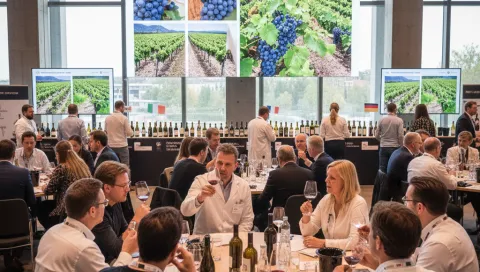
The PIWI World Summit (November 8–9, 2025) in Berlin marks a milestone for the international community focused on fungus-resistant grape varieties (PIWI). Over ten countries were represented, emphasizing the growing global significance of PIWI viticulture. Researchers, winemakers, and growers exchanged insights on climate-resilient cultivation, oenology, and sensory analysis. At the Kühlhaus, 32 wineries showcased their PIWI wines in the Wine Salon, receiving praise for quality and dialogue. Despite lower-than-expected attendance, discussions were intense and constructive. The program, compiled with leading institutions, highlighted current developments in research and practice. With more than 1,000 members in 31 countries, PIWI International continues to grow, new national associations are emerging, and international collaboration is strengthening.
Our take
The article presents a positive picture of the premiere summit but lacks critical reflection on attendance figures and concrete impact. The terms PIWI and sustainable viticulture are used without a deep definition of how these varieties differ in genetics, yield, or market potential. Analytical insight into obstacles, economic feasibility, and adoption in traditional wine regions is missing, which would provide readers with more context.
About the publisher
PIWI International positions itself as an umbrella organization for fungus-resistant grape varieties and sustainable viticulture. As an advocacy and knowledge platform, it is growing rapidly, but there is a risk that the focus on promotion may underrepresent the critical scientific evaluation of PIWI performance in cultivation and the market.