Summary
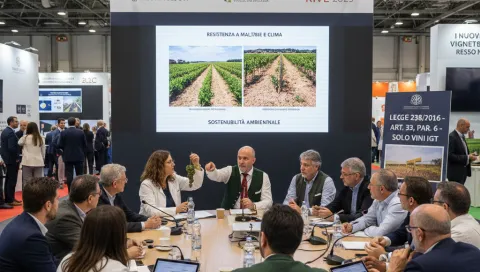
The discussion on resistant grape varieties – the so-called Piwi (Pilzwiderstandsfähige Rebsorten) – highlights a fundamental tension in Italian viticulture: the balance between tradition and sustainability. Piwis are bred via classical crossings to combine multiple resistance mechanisms against fungi such as mildew. “Pyramiding” these mechanisms greatly reduces the risk of resistance failure.
Although EU regulations permit inclusion in appellations, Italy’s Testo Unico del Vino (Law 238/2016) allows their use only in IGT wines. This limits their spread despite regional authorization and approximately 2,000 hectares planted, mainly in Northeastern Italy.
Consortia such as the Consorzio Prosecco DOC and the Consorzio Pinot Grigio delle Venezie explore integration within complementary quotas through microvinification and sensory analysis. In contrast, the Consorzio Barolo Barbaresco Alba Langhe e Dogliani, with 100% Nebbiolo rules, excludes any additions, defining identity as historical continuity.
The French example – introducing resistant varieties in Bordeaux and Champagne – demonstrates an alternative model: long-term field trials, limited areas, and controlled blends. The core question remains whether sustainability can be integrated without undermining the semiotic and economic value of appellations.
Our take
The article frames Piwi mainly as a technical solution to climate and disease challenges, underestimating the symbolic weight of appellations. Authenticity is socially constructed, not purely agronomic. Innovation versus tradition is less absolute than suggested: controlled experiments in complementary quotas offer a rational middle path. Policy change without broad producer consensus could be counterproductive.
About the publisher
WineNews is an Italian trade platform covering the wine sector, policy, and market. It blends news with industry interests, generally adopting an institutional perspective. Investigative journalism is limited in favor of sector-focused reporting.