Summary
The Swiss wine industry is currently facing a perfect storm. Between declining consumption and a brutal cycle of frost, hail, and fungal disease, many growers are reaching a breaking point. Even prestigious names like the Kartause Ittingen have recently opted to pull out their vines entirely. Yet, in the middle of this crisis, Roland Lenz of Iselisberg looks less like an outlier and more like a man who saw the future coming.
Lenz and his wife Karin have spent thirty years betting on "Piwi" varieties — Pilzwiderstandsfähige Rebsorten. These are fungal-resistant crosses that allow them to bypass the chemical spray runs that used to give Lenz chronic headaches as a young man. The "aha" moment arrived during the disastrous 1999 season; while the rest of the farm's traditional vines collapsed under the rain and rot, the resistant hectare thrived.
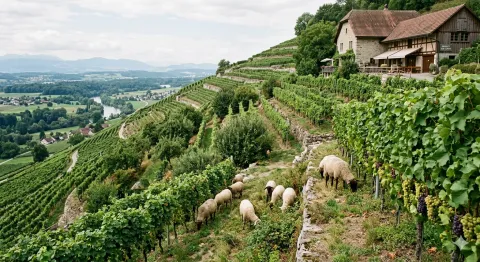
Today, the Lenz estate is a lush 21-hectare ecosystem where pomegranates, hazelnuts, and sheep coexist with the vines. The results speak for themselves: soil health is up, yields are stable, and the critics are taking notice. In 2025, Vinum handed out top scores to his bottles, and major players like Rutishauser Divino are finally moving Piwi wines into the commercial mainstream. While traditionalists like Master of Wine Philipp Schwander still argue that Piwis can't match the finesse of a classic Pinot Noir, Lenz isn't interested in the argument. He’s too busy succeeding.
Our take
This is a solid piece of regional reporting, but it feels like it stops just as it gets interesting. While the author captures Lenz’s passion perfectly, the actual "opposition" to this movement is barely explored. We get a single sentence from a skeptic and very little independent data to back up the claim that biodiversity actually boosts yields. The article asks why more farmers haven't made the switch, then lets the industry off the hook by blaming "time." It’s a great profile, but it misses the chance to be a truly disruptive investigation into why the wine establishment is so slow to evolve.
About the author
Rafael Rohner has been a staple of Swiss regional journalism since 2010, moving from the St. Galler Tagblatt to the Winterthur Landbote. He’s not just a writer; he holds a degree in environmental science, which makes the "light" touch on the hard agronomic data in this piece a bit frustrating. He clearly understands the science, but his professional style remains cautious and observational, likely a result of his deliberate choice to stay neutral and avoid the fray of public opinion.
About the publisher
The Tages-Anzeiger remains the heavy hitter of the Swiss media landscape, but it’s currently weathering its own storm. In late 2024, parent company Tamedia announced massive restructuring, cutting 290 jobs and absorbing local papers like the Landbote into its main editorial skeleton. This pressure to produce more with less might explain why we’re seeing a shift toward polished personality profiles rather than the deep-dive investigative pieces that the industry desperately needs.