Summary
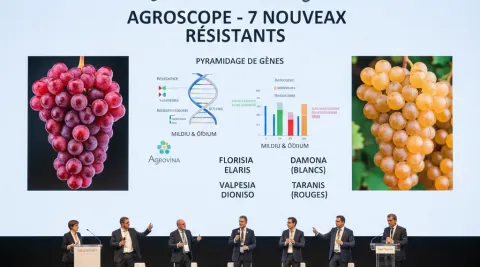
Agroscope announces the approval of seven new grape varieties — Florisia, Elaris, Orellis, Damona, Valpesia, Dioniso, and Taranis — developed over more than fifteen years. Four white and three red varieties combine at least two resistance genes against the two main fungal diseases of the vine: downy and powdery mildew. This gene pyramiding increases resistance durability and reduces susceptibility to black rot and botrytis. Field trials in Switzerland and France show strong performance under high disease pressure. While one to two fungicide treatments per year are recommended to prevent resistance breakdown, overall use can decrease by 80–90%. In collaboration with INRAE, Agroscope builds on intensive selection to link high-quality wines with environmentally conscious farming. The first plants will be available to growers around 2029.
Our take
The article rightly highlights innovations in disease-resistance breeding but lacks nuance regarding potential drawbacks such as genetic uniformity, flavor diversity, and long adoption times in commercial vineyards. The focus is strongly on resistance rates; a critical view on agro-ecological risks and market relevance is missing.
About the publisher
Agroscope is the Swiss federal research institute for agriculture, combining fundamental and applied research. Critically, it often operates close to policy agendas, which may affect objectivity in sustainability claims.